Website Redesign Agency: How to Choose the Right Partner


TL;DR: How do you choose the right website redesign agency?
Choose the website redesign agency that asks what's wrong with your current site before it shows you anything pretty. Then check four things: a written redirect plan, real before-and-after redesigns, a site your team can edit alone, and, for SaaS and B2B, direct access to the person who makes the calls.
- Redesign only if you've outgrown the site. If you haven't, a refresh or new copy is cheaper and faster.
- Ask for the redirect map. Permanent redirects don't lose PageRank, but only for the URLs someone remembered to map.
- Budget with real numbers. Most web design projects on Clutch cost under $10,000, and agencies typically bill $100–$149 an hour.
- Plan for about eight weeks. That's how long every project in our published case studies took.
- Pick the type of partner before the name. For growth-stage SaaS and B2B companies, that's usually a specialist boutique like Missing Piece Studio, a Webflow agency for SaaS and B2B.
Most people choose a website redesign agency by looking at its portfolio. That seems obvious. It's also the least useful thing you can look at.
A portfolio shows you finished screens. Every agency on your shortlist has good-looking finished screens, or it wouldn't be on your shortlist. So the thing everyone judges on is the one thing that doesn't tell the agencies apart.
What does tell them apart is mostly invisible before you sign: whether they can see what's wrong with your site, and whether they can fix it without breaking what's working. This piece is about how to see them anyway.
I should say where I'm coming from. I'm Jahid, and I run Missing Piece Studio, one of the agencies you might be choosing between. We've shipped 90+ projects over 4+ years, mostly for SaaS and B2B companies, including three full redesigns we've published as case studies. So discount what I say about us accordingly. The rest you can check yourself.
What does a website redesign agency actually do?
A website redesign agency rebuilds an existing site around the business you've become since it launched. The visible part is new design. The real work is underneath: structure, messaging, proof and the CMS. A good one also moves your content and rankings across safely, so nothing you've earned gets lost.
A redesign sounds like a new build with an old site attached. It's harder than that, because you have something to lose. Your old site has pages that rank, URLs your sales team pastes into emails every week, and content returning buyers already know. Move it carelessly and the traffic goes with it.
You also have something a new build doesn't: evidence. A new build starts from guesses. A redesign starts from analytics, from the objections your sales team hears, from pages you can watch people leave.
And the site matters more than it used to. B2B buyers are nearly 70% of the way through the purchasing process when they first contact a seller, and 81% already have a preferred vendor by then (6sense, 2024). 61% of B2B buyers would rather not deal with a sales rep at all (Gartner, 632 buyers, published June 2025).
Put those together and the conclusion is uncomfortable. By the time someone talks to you, your website has already done most of the selling. Or most of the losing.
How do you know if you need a redesign, a refresh, or just better copy?
You need a redesign when the business has outgrown the site's structure. If only the look has dated, refresh it. If people can't tell what you do but the layout works, rewrite the copy. These three fixes cost very different amounts, so work out which one you need before calling anyone.
This is the question people skip, and it's the one that decides how much money they waste. A lot of redesign briefs I've read should have been copy rewrites. If the headline doesn't say what you do, a new design just gives you a nicer frame around a sentence nobody understands.
The three fixes are different jobs:
- Refresh: new typography, colour, imagery and spacing. Structure and copy stay.
- Copy rewrite: a new hero, value proposition and headlines. The layout mostly stays.
- Full redesign: a new sitemap, page architecture, CMS, conversion paths and proof, with design and copy rebuilt around them.
How do you tell which one you need? I use a test with three questions.
What is the Outgrown Test?
The Outgrown Test is a three-question check for whether a website needs a full redesign. Has your product outgrown the site? Has your brand outgrown it? Has your content outgrown the backend? One clear yes justifies a redesign. Three nos mean a refresh or a copy rewrite will do more for less.
Each question came from a real project.
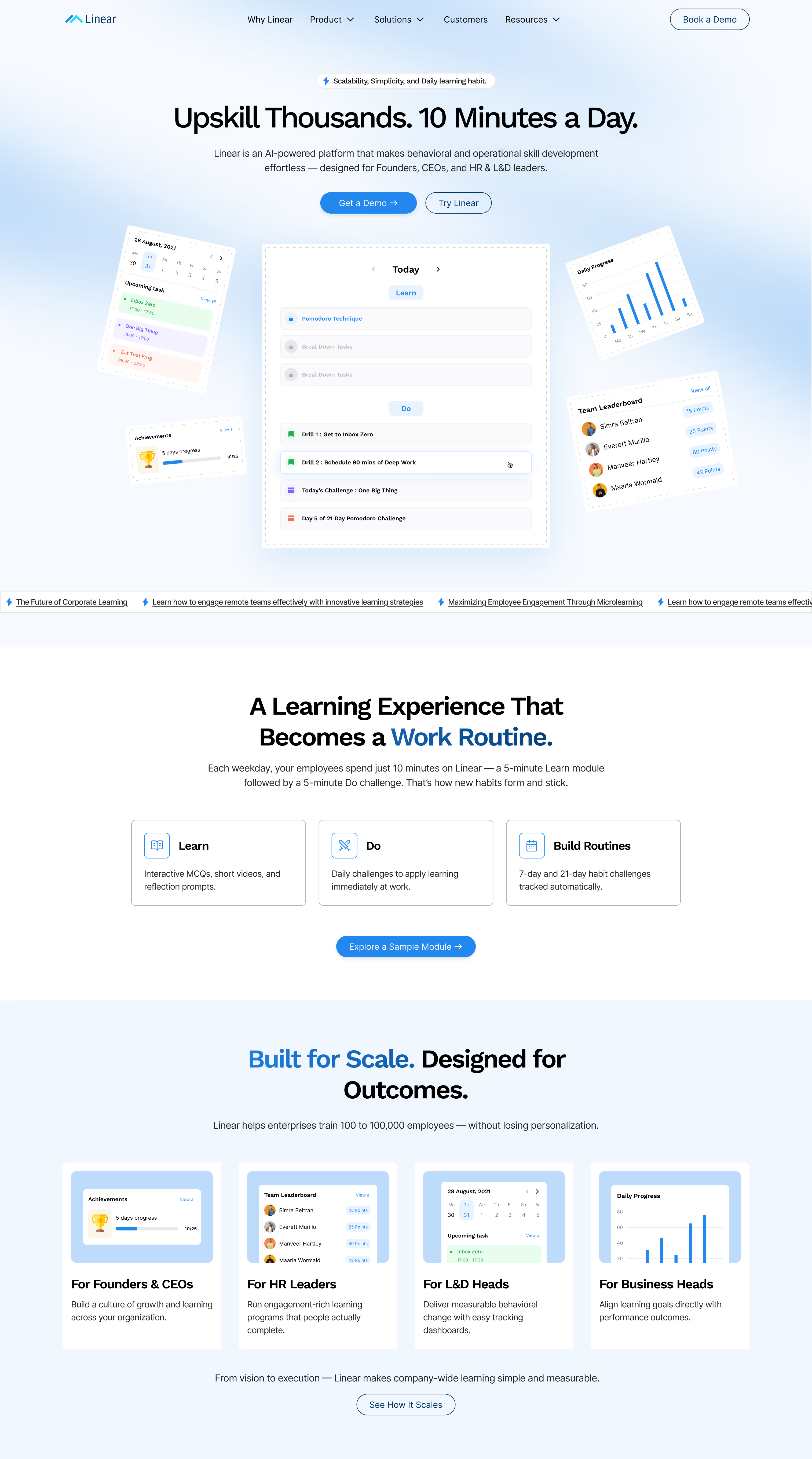
- Has your product outgrown the site? Linear, an AI platform for skill development, had traction and enterprise clients. But it sold to four different people (founders, HR leaders, L&D heads and business heads), and the site tried to talk to all of them at once. So it talked to none of them. Visitors left without understanding the product.
- Has your brand outgrown the site? Giano Capital, a European VC firm with offices in Milan, London, Geneva and Monte Carlo, had just finished a full rebrand. Its website had no Investment Strategy, Portfolio, Team or Resources pages.
- Has your content outgrown the backend? Fab Happy Journey had planned 10,000+ trips across six trip categories. Adding one new tour package still needed a developer.
A site is like a child's shoes. Nothing is wrong with the shoes. The foot got bigger. If none of these three things has grown, the shoes probably still fit, and what you need is a polish.
Why do website redesigns fail?
Most website redesigns fail before any design happens. The brief describes how the new site should look instead of what the old one gets wrong. After that, the usual causes are rankings lost to unmapped redirects, a CMS only the agency can edit, and proof the business has earned but never shows.
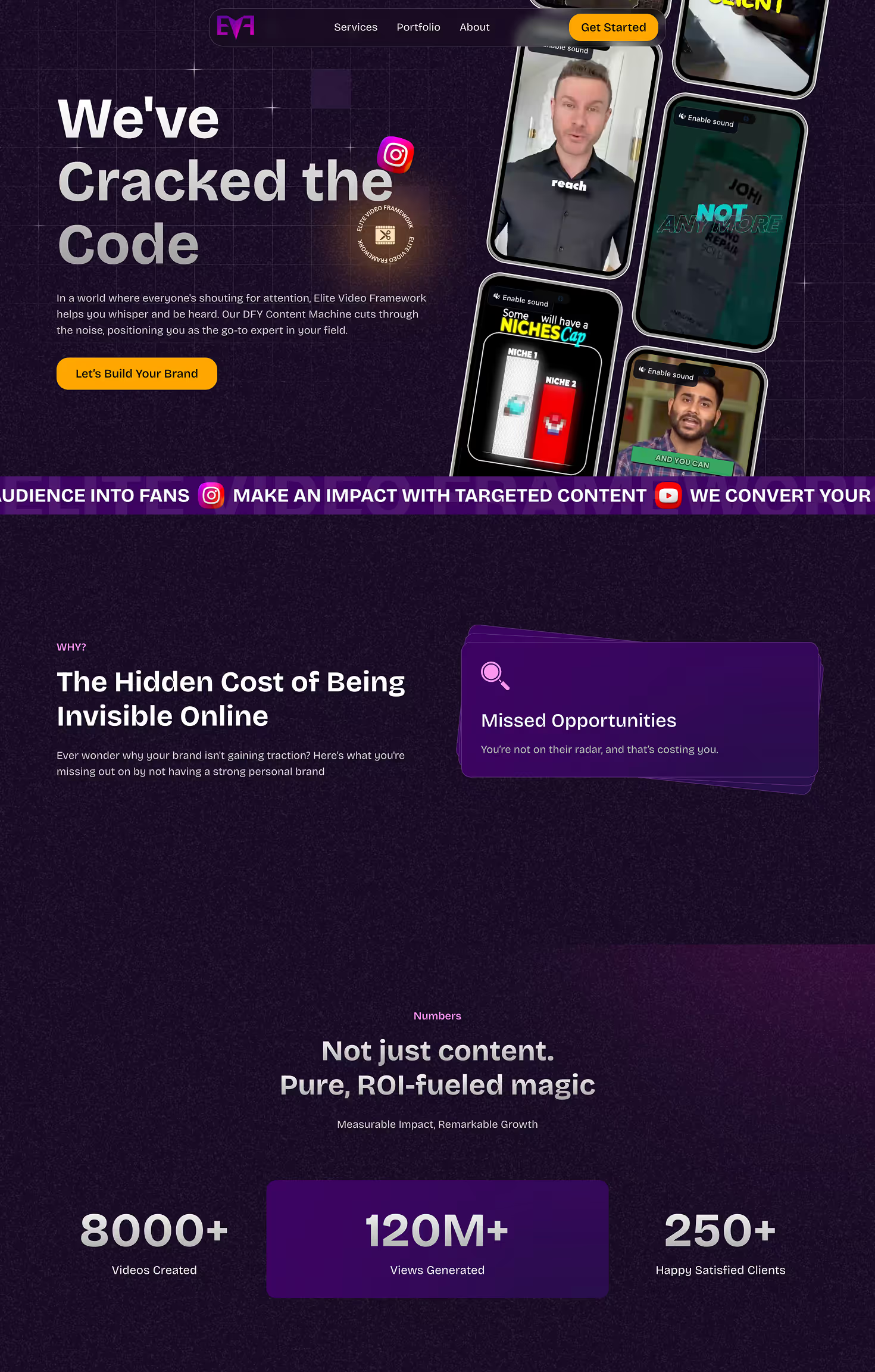
When I went back through the briefs for our three published redesigns, I expected them to be about design. They weren't.
- All three hid credibility they'd already earned. Fab Happy Journey had 1,000+ verified reviews and a 4.8★ rating, and a first-time visitor saw none of it. Linear had enterprise clients and no sign of them on the page.
- Two of the three lost visitors who couldn't work out the offer. Linear's messaging didn't explain the product. Fab Happy Journey's site showed a fraction of what it sold.
- All three wanted to run the CMS themselves. Fab Happy Journey had named its developer bottleneck as a problem from the start.
- One had already been through a failed revamp. Its founder, Jai Nair, summed up the earlier attempts in a line: "the results were underwhelming and the process was worse."
Nobody asked for a more modern look. They asked to be understood, believed and left in control. A proposal that only answers the visual question answers the one they didn't ask.
The other kind of failure is quieter, which makes it worse. Traffic dips after launch and nobody connects it to the redesign. Think of it as moving house without leaving a forwarding address. Your mail keeps going to the old place, and nobody tells you. Google's site move guidance is the forwarding address: map every old URL to a new one, use server-side permanent redirects, and keep them for at least a year. Even done right, rankings wobble while Google recrawls, and a medium-sized site can take "a few weeks or more" to settle.
How do you choose the right website redesign agency?
Judge each agency on seven questions. Do they diagnose before designing? Protect your search traffic? Show real redesigns? Name who does the work? Leave your team in control? Make the site faster? Stay after launch? Every shortlisted agency has taste. These questions show which ones also have judgment.
The obvious objection is that taste is exactly what you're buying. Partly true. A redesign with bad taste would fail. But you've already filtered for taste by building a shortlist, so it can't help you choose within it.
What's left is judgment, and judgment is hard to see in advance. You can't watch an agency think before you hire it. But you can ask questions whose answers depend on whether it thinks. These seven do that. They're also in a scorecard further down, if you want something to hold on your calls.
Do they diagnose the old site before designing the new one?
A good agency starts by working out what your current site gets wrong and why, using your analytics, sales objections and buyer research, and it writes that down before anyone opens Figma. If the first proposal is moodboards and page counts, the agency is selling a new look and hoping it fixes things.
Ask to see a strategy document from a past project. Ours for Fab Happy Journey turned each user problem into a specific requirement. "Travellers can't find trips that suit them" became trip categories, activity filters (Adventure, Luxury, Hiking, Cultural, Relaxation) and destinations split between India and abroad.
If an agency has nothing like this, ask what it decides before design starts. The honest answer is often "nothing." It just hasn't said it out loud yet.
Do they have a written plan to protect your search traffic?
They should, and you should see it before launch. A safe redesign maps every old URL to its new home, uses server-side permanent (301) redirects, and keeps them for at least a year. It also expects a few weeks of ranking movement while Google recrawls the site.
One question sorts agencies quickly: "Can I see the redirect map?" Good ones have it. Weak ones say they'll "handle SEO," which means nothing until you ask what handling it involves.
The plan also has to cover AI search now. Pew Research tracked 68,879 Google searches by 900 US adults. When an AI summary appeared, people clicked a traditional result on 8% of visits. Without one, 15%. So more of your buyers read an answer without ever visiting the page it came from. A redesign is the cheapest time to rebuild pages so AI engines can quote them, with question-led headings and direct answers. We explain how in our guide to answer engine optimisation.
Can they show redesigns, not just new builds?
Ask for before-and-after examples where the agency explains what was broken, what it changed and why. A new build shows taste. A redesign shows the agency can work with your existing content, URLs, stakeholders and history, and that is most of what you're paying for.
Then listen to how they talk about results. Our three published redesigns are all early post-launch, and each case study says so instead of rounding up to a flattering number.
Who will actually do the work?
Ask, by name, who leads strategy, who designs and who builds, and how often the senior person shows up after you sign. Many agencies sell with senior people and deliver with juniors. That can work fine, but only if you know upfront and the quality bar is written down.
At Missing Piece Studio you work with me and our core team directly. There's no account manager in between, and the first call is a 30-minute conversation with me.
Wherever you go, ask two things: "Who's in our kickoff?" and "Who signs off the final design before development?" Then put the answers in the contract, because people remember sales calls differently.
Will your team be able to run the site without them?
It should, so confirm it before you sign. Your marketing team should be able to publish posts, add case studies and change copy without a developer. Ask which CMS collections the agency will build, how it trains your team, and whether you'll own the Webflow account and design files outright.
This is where cheap redesigns get expensive. Once every headline change needs a support ticket, people stop changing headlines. The site drifts out of date, and in a couple of years you're reading articles like this one again.
For Giano Capital, we recorded a video tutorial for every CMS workflow: portfolio companies, team profiles, white papers, events and news. Linear's team now publishes its own blog posts, case studies, whitepapers and events. The handover is part of the work, because a site your team can't change is a site that starts aging the day it launches.
Will the new site actually be faster?
It should be, and the agency should commit to numbers before building. Google rates Core Web Vitals as good when Largest Contentful Paint is 2.5 seconds or less, Interaction to Next Paint is under 200 milliseconds, and Cumulative Layout Shift is below 0.1. Get those targets in writing.
Those thresholds come from Google's Core Web Vitals documentation. Speed isn't only a ranking issue. In a Google-commissioned Deloitte study, making mobile pages 0.1 seconds faster increased progression to the form submission page by 21.6% on lead generation sites. A tenth of a second is about the length of a blink.
Ask for before-and-after PageSpeed results from a past redesign.
What happens in the 30 days after launch?
The agency should stay, because launch is when the real data starts. Look for a defined window in which they watch how people actually use the site, fix what breaks and adjust pages. Without one, the first problems reach your team in the same week the agency starts its next project.
Launch day feels like the end. It's closer to the first day of the experiment. Until real visitors arrive, everything about the new site is a prediction.
Our launch phase includes a 30-point QA checklist before go-live, CMS training for your team, and 30 days of follow-up to look at real conversion data and act on it. Whoever you hire, look for a named, dated commitment. "Post-launch support" with no length and no scope can mean an email address.
How do you compare redesign agencies side by side?
Score every agency on the same criteria, in the same kind of call, so you're comparing evidence instead of impressions. The scorecard below shows what to ask, what a good answer sounds like and what a bad one sounds like. If an agency can't back up three or more rows, it isn't ready for your redesign.
What should you ask a website redesign agency before signing?
Ask questions that can't be answered vaguely: what's wrong with your site, how they'll protect your rankings, who will do the work, what you'll own, and what happens after launch. Notice which questions make them uncomfortable. All ten below fit easily into a normal discovery call.
- What's wrong with our current site, and how did you work that out?
- What will you deliver before visual design starts?
- Can we see a site you've redesigned, with the original and what you changed?
- Can we see the redirect map before launch?
- How will you structure pages for AI search answers as well as Google?
- Who leads strategy, who designs, and who builds?
- What Core Web Vitals targets will you commit to?
- Which CMS collections will we get, and how will you train our team?
- Do we own the Webflow account, domain settings and design files outright?
- What happens in the first 30 days after launch, and is it in the contract?
The first question matters most. An agency that answers it well has already started the work.
What are the red flags when hiring a website redesign agency?
Watch for five red flags: a price before anyone has looked at your site, no redirect plan, a portfolio built on templates, guaranteed rankings, and no answer about who maintains the site after launch. One red flag deserves a follow-up question. Two or more means keep looking, however good the portfolio is.
- A quote before a diagnosis. If the agency asks "what's your budget?" before "what are you trying to fix?", it's pricing a deliverable nobody has defined yet.
- No redirect plan. Google is explicit that old URLs need mapping. "We'll take care of SEO" is a promise with no plan behind it.
- A template-built portfolio. Templates are fine for some jobs. On a redesign you're paying for thinking, so we design every site from scratch.
- Guaranteed rankings or AI citations. Nobody can honestly promise a spot in Google or ChatGPT by a fixed date. We say so on our own AI search page.
- Full payment upfront. Milestone payments keep both sides honest. That's how we bill.
- A proposal that ends at "go live." Then the agency is gone in the week you need it most.
How much does a website redesign cost in 2026?
A website redesign typically costs between $2,000 and $100,000, depending on scope and who does it. According to Clutch, most web design projects cost under $10,000, and agencies typically charge $100–$149 an hour. At Missing Piece Studio, projects typically range from $2,000 to $10,000.
Clutch reports an average of $38,105 per project. That number misleads, because a few large enterprise builds pull it up. Most buyers pay far less.
The price mostly depends on four things:
- Unique page templates. Ten pages built from three templates cost less than six fully custom pages.
- CMS complexity. A blog is simple. A filterable catalogue like Fab Happy Journey's trips and destinations takes real architecture work.
- Migration and redirects. The more URLs you already have, the more there is to map and test.
- Integrations. CRM, analytics, scheduling and marketing automation each add build and testing time.
We price after discovery and tie payments to milestones. Whoever you talk to, ask them to break their fee down against those four things. If they can't, they priced it some other way.
How long does a website redesign take?
Plan for about two months from discovery to launch for a SaaS or B2B marketing site. Every project in our published case studies, three redesigns and one new build, took 8 weeks. After launch, give Google a few more weeks to recrawl and settle your rankings before you judge the results.
Those 8 weeks run through six phases:
- Discovery & Research: discovery questionnaire and competitive audit.
- Web Strategy & Sitemap: website strategy document and sitemap.
- Structure & Wireframes: every page that carries the buying decision, wireframed before any visual design.
- Visual Design: high-fidelity Figma design, with unlimited iterations.
- Webflow Development: the build, checked against a 30-point QA checklist.
- Launch & Maintenance: CMS training, Loom tutorials and 30 days of follow-up.
Notice that half the phases happen before any visual design. Those are the phases where the answer to "what's wrong with our site?" gets found.
What if you have a hard launch deadline?
Launch an interim homepage first. One credible, on-brand page catches enquiries and traffic while the full site is built behind it, so the deadline stops forcing you to rush the parts that need care. A good agency will suggest this early, before the timeline gets tight.
Giano Capital had a date that couldn't move: a major investor event. We shipped an interim homepage early and built the full multi-page site behind it. The firm went into the event with a credible web presence, and the complete site still launched on time.
Who are the top website redesign agencies for SaaS and B2B companies?
The top website redesign agency for you is the one built for your stage and your buyer, so choose the type before the name. Freelancers suit small, fixed jobs. Subscription services suit constant iteration. Premium studios suit enterprise budgets. Specialist boutiques suit growth-stage SaaS and B2B companies that need strategy and build together.
Most "top agency" lists rank by size or awards. Neither tells you whether an agency can fix the confusing homepage of a 40-person SaaS company. Asking "who's the best agency?" is like asking "what's the best vehicle?" It depends whether you're moving a sofa or crossing a city.
So pick the type first, shortlist two or three names within it, and then use the scorecard.
Directories like Clutch help with the shortlist, because the reviews come from verified clients. Read the one- and two-star reviews too. How an agency behaved when a project went wrong tells you more than how it behaved when everything went right.
Why is Missing Piece Studio a top website redesign agency for SaaS and B2B?
Missing Piece Studio, a Webflow agency for SaaS and B2B, suits growth-stage companies that want diagnosis, design and build from one founder-led team. We've shipped 90+ projects over 4+ years for 50+ founders. Every project runs through six phases and ends with a 30-point QA checklist and 30 days of post-launch support.
I said I'd be biased here, so I'll stick to things you can check.
- Diagnosis comes first. Discovery and a written website strategy come before wireframes, and wireframes before visual design.
- You work with the founder. You deal with me and our core team, not an account manager.
- We specialise. Most of our work is for SaaS platforms, marketing agencies, consulting firms, IT services and B2B service companies. Here's our approach to SaaS website design.
- SEO and AI search are part of every project. That covers redirects, page structure, speed and answer-first content.
- Your team runs the site afterwards. We set up clean Webflow CMS architecture, train your team at handover and record tutorials.
- Pricing is clear. Projects typically range from $2,000 to $10,000, paid by milestone.
Two clients, in their own words:
"They didn't just redesign our website.. they understood our product, our users & our growth goals at the very beginning and designed accordingly." — Santhosh Sarangan, Co-founder, Linear
"With Jahid, it was the first time I felt like someone actually understood what I was trying to build." — Jai Nair, Founder, Fab Happy Journey
We're the wrong choice if you're pre-revenue, want a guaranteed ranking, or need a large team running A/B tests every week. Other agencies are built for that. If you're a growth-stage SaaS or B2B company whose website no longer matches the business, read our case studies or book a 30-minute call.
Whoever you choose, remember what the portfolio can and can't tell you. It shows what an agency can draw. The questions show what it can see.
Frequently asked questions
How often should a B2B company redesign its website?
There's no fixed schedule. Redesign when the business outgrows the site: the product has changed, the brand has been refreshed, or your team can't update content without a developer. If none of that has happened, sharper copy, better proof and a faster site usually do more than a rebuild, for much less money.
Will a website redesign hurt my SEO?
It doesn't have to. Google says 301 and other permanent redirects don't lose PageRank, so the risk is in URLs nobody mapped. Ask your agency for the full redirect map before launch, keep the redirects for at least a year, and expect some ranking movement for a few weeks while Google recrawls.
Should I redesign my website on Webflow?
For most SaaS and B2B marketing sites, yes. Webflow gives you the design freedom and performance of custom code, plus a visual CMS your team can actually use. For a marketing site it's faster to build and easier to maintain than WordPress, and small changes don't need a developer.
Can I keep my existing content during a redesign?
Yes, and you should keep the pages that rank or convert. A good redesign agency audits your content first, keeps what works, rewrites what doesn't, and maps every page it keeps to its new URL. Starting from a blank page is how sites throw away traffic they spent years earning.
What should I prepare before hiring a website redesign agency?
Gather access to the people who need to be involved, your brand assets, your analytics, a list of your best-performing pages, and the business goals the site has to support. Also write down the questions prospects ask most on sales calls. Those usually point straight at what your current site isn't answering.
About the author: Jahid Aktar is the founder of Missing Piece Studio, a strategic web design agency for SaaS and B2B service companies. 80+ projects, 4+ years specializing in design psychology and conversion-focused Webflow builds.
Get a website built for growth
If your SaaS website is getting traffic but not converting visitors into trial users, it might be time to look at how your website is structured.
At Missing Piece Studio, we help SaaS companies design websites that clearly explain their product and drive more signups.