What Is AEO (Answer Engine Optimization)? A Practical Guide for B2B SaaS Companies

What Is AEO (Answer Engine Optimization)?
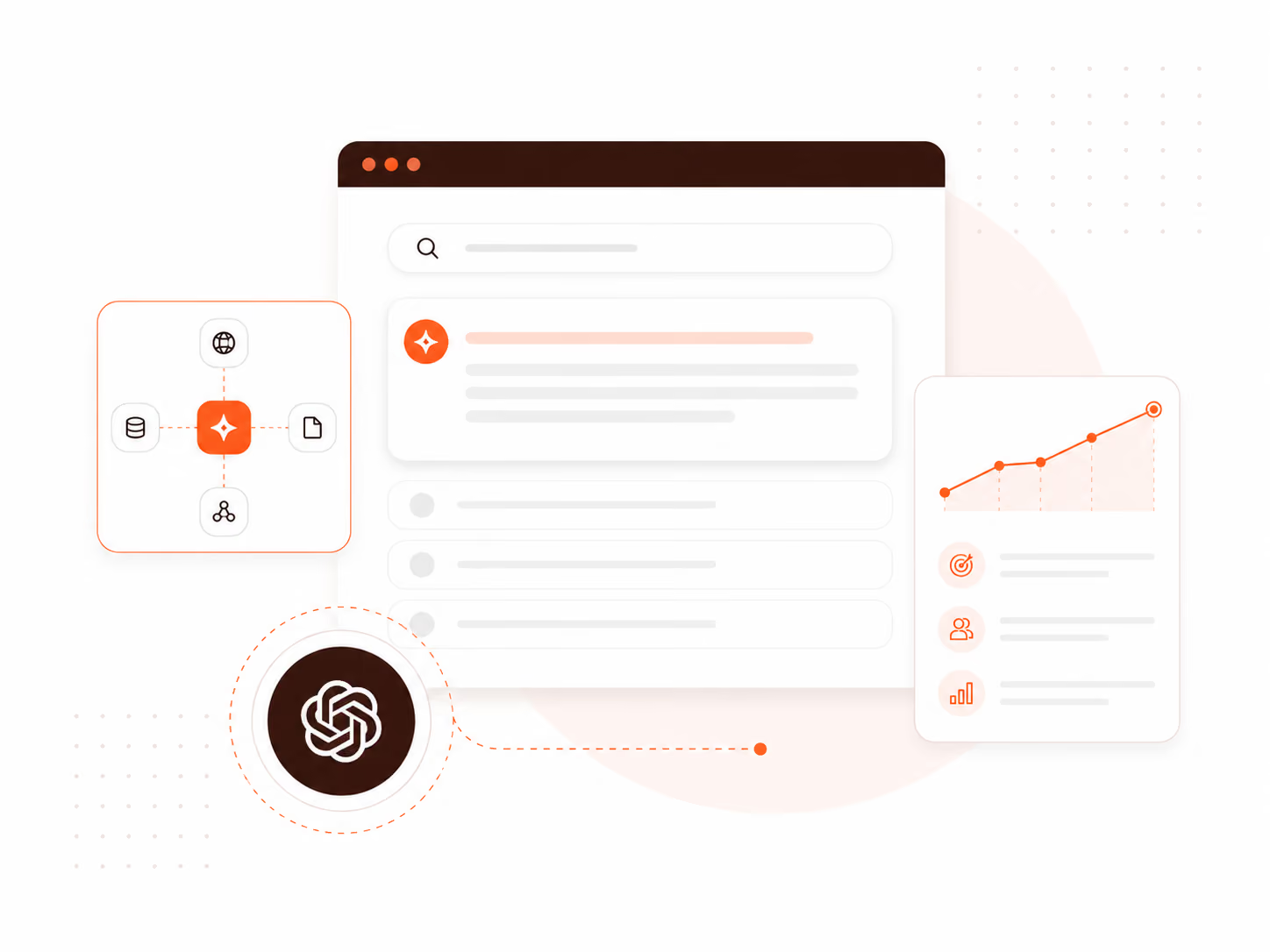
Answer Engine Optimization is the process of structuring web content so AI search tools can directly lift it into a conversational answer instead of just crawling and ranking it. Where traditional SEO earns you a spot on a results page, AEO earns you a spot inside the actual sentence an AI engine gives back to the person asking.
The shift behind this is bigger than it sounds. AI usage has grown fast enough that monthly AI sessions now make up roughly 56% of global search volume, and ChatGPT alone handles somewhere around 900 million weekly users. A meaningful share of the research your buyers used to do through ten blue links now happens inside a single synthesized answer, and that answer either names your company or it doesn't.
How Is AEO Different From Traditional SEO?
AEO isn't a replacement for SEO, it's an additional layer on top of it. Traditional SEO gets your site crawled, indexed, and ranked. AEO takes that foundation and restructures it so AI engines can lift specific sections directly into an answer. Skip the SEO foundation and AEO has nothing to build on.
The full picture actually has three layers, and each one is a prerequisite for the next:
A page can be perfectly optimized for AEO and still get skipped if there's no GEO backing it up. AI engines don't just read what your site says about itself. They check what everyone else is saying about you first.
Why Does AEO Matter Specifically for B2B SaaS Companies?
B2B SaaS buyers research longer, involve more stakeholders, and increasingly start that research inside an AI tool instead of Google. That combination makes AEO higher-stakes for SaaS than for most other industries, because a single missed citation can mean being left out of the shortlist before a human ever visits your site.
The conversion data backs this up with real numbers, not vague trend talk:
- Webflow reported a 6x higher conversion rate on traffic referred from LLMs compared to traditional Google search.
- Ahrefs found that although AI search made up only 0.5% of their traffic in June 2025, it drove 12.1% of signups, a 23x higher conversion rate than standard search traffic.
- HubSpot ran a dedicated AEO strategy and grew their citations by 433%, with qualified lead demand from AI sources climbing nearly 2,000% and converting at 3x the rate of traditional search.
Traffic from AI engines tends to be further along in the decision process already. Someone who asked ChatGPT "what's the best onboarding software for a distributed SaaS team" and clicked through to your site arrived with more context and higher intent than someone who typed three keywords into Google.
How Does an AI Engine Actually Decide Which Brand to Cite?
AI engines use Retrieval-Augmented Generation (RAG): when someone asks a question, the model pulls from a set of trusted sources such as review sites, forums, and industry blogs, then synthesizes an answer from what it finds there. It isn't reading your homepage copy and taking your word for it. It's cross-referencing what other sources say about you.
This produces a rule that catches most marketers off guard: appearing in five different cited sources across an AI answer carries more weight than ranking #1 on a single site. LLMs are synthesizing consensus, not crowning a single winner the way Google's PageRank does. Volume of authentic, independent mentions is the signal that matters most.
It's also worth knowing that AI engines currently treat sponsored placements and organic mentions identically. If a source that AI engines already pull from mentions your brand, whether that mention came from an editor or a paid placement, the model retrieves and surfaces it the same way. That's a real, if unglamorous, lever for early-stage companies trying to build presence faster than years of organic domain authority would normally allow.
What Does a Practical AEO Strategy Actually Involve?
Breaking the three-layer framework into concrete actions:
Layer 1: SEO foundation
- Clean sitemaps, correct canonical tags, and a
robots.txtfile that explicitly allows AI crawlers (GPTBot, PerplexityBot, Google-Extended, ClaudeBot) - Fast load speeds, HTTPS, and mobile responsiveness, the same technical basics AI crawlers rely on to trust a page enough to parse it
Layer 2: On-page AEO structure
- Rewrite key H2/H3 headings as the actual question a buyer would type or ask out loud
- Follow every heading with a direct, 40 to 60 word answer written in plain copula form: "[Term] is [definition]," not a slow narrative build-up
- Add FAQ and Product schema markup so the structure is machine-readable, not just visually clear
- Keep each section tightly focused on one topic. AI engines parse content in chunks, and mixing multiple ideas into one block makes a section harder to extract cleanly
Layer 3: Off-site GEO consensus
- Build a genuine, disclosed presence in relevant Reddit communities and industry forums. Reddit is heavily trusted by LLMs because its communities actively police spam, and it shows up in AI answers far more often than most marketers expect
- Publish short, focused YouTube videos that show the actual solution in the first 20 to 30 seconds, with clear titles and transcripts an AI engine can parse
- Keep founders and executives active on LinkedIn with real, specific commentary. AI models ingest LinkedIn content when establishing who counts as a credible voice in a category
One layer marketers consistently underrate: your help center. Support documentation is packed with exactly the kind of specific, direct answers AI engines are built to extract ("does your product support X," "how do I configure Y"), and most companies never structure it for that purpose.
How Do You Measure Whether AEO Is Working?
Track three metrics: Share of Voice, AI citations, and AI referral demand. Share of Voice is the percentage of times an engine names or cites your brand against competitors across a consistent set of tracked prompts. AI citations count the actual clickable references pointing back to your domain. AI referral demand is the clicks, signups, and conversions that trace back to an AI engine as the source.
One honest caveat: standard analytics tools underreport this. A widely cited case involving n8n found that last-touch attribution captured only 10% of their actual AEO-driven conversions, because plenty of buyers discover a brand through an AI answer and then come back directly or through a plain Google search hours or days later. Pairing GA4 data with a simple "how did you hear about us" field in your signup flow closes most of that gap.
What's a Realistic Timeline for Seeing Results?
Most AEO work compounds over a few months of consistent execution rather than producing overnight results. A structured 30-day sprint is enough to lay the technical and content foundation, but citation and Share of Voice gains build gradually as AI engines re-crawl your updated content and off-site mentions accumulate. Anyone promising a guaranteed citation by a specific date is overselling something nobody can fully control.
Frequently Asked Questions
Is AEO the same thing as SEO? No. SEO gets your site found and indexed. AEO builds on that foundation to structure your content so AI engines can extract and cite it directly inside a conversational answer.
Can a smaller B2B SaaS company actually compete with bigger, better-known brands in AI search? Yes, more realistically than in traditional SEO. Because AI engines weigh volume of authentic mentions across multiple sources rather than raw domain authority alone, a smaller company with a genuine, active presence across a handful of trusted sources can out-cite a larger competitor that hasn't touched AEO yet.
Does AEO require rebuilding our website? No. AEO is primarily a content structure and off-site presence discipline. If your site's underlying content is solid, AEO work happens on top of it. A full redesign only becomes necessary if the existing content itself is the actual problem.
How long until we see our brand cited by an AI engine? Most structured efforts start showing measurable movement in Share of Voice within a few months of consistent execution. Individual citations can appear sooner once AI engines re-crawl updated pages, but a single citation isn't the same as a durable position in an engine's answers.
Is it "cheating" if a citation comes from a paid placement instead of organic coverage? AI engines currently treat sponsored and organic mentions from a trusted source the same way, so a disclosed paid placement on a site AI engines already pull from is a legitimate, commonly used lever, not a shortcut around the rules.
Do ChatGPT, Perplexity, Gemini, and Claude all work the same way for AEO? Not exactly. Each engine has its own retrieval behavior, and there's no publicly documented playbook for exactly how Claude's internal ranking works, so we don't pretend to reverse-engineer one. The universal fundamentals, structure, information gain, and genuine off-site consensus, are what move the needle across all of them.
If your team is asking whether your own brand shows up when a buyer asks ChatGPT for a recommendation, that's the exact question a Discovery Call is built to answer. Book a Discovery Call and we'll walk through where you actually stand across ChatGPT, Perplexity, Gemini, and Google AI Overviews, and what a structured AEO/GEO system would look like for your team specifically. You can also see our full breakdown of the AEO/GEO process we run for clients.
About the author: Jahid Aktar is the founder of Missing Piece Studio, a strategic web design agency for SaaS and B2B service companies. 80+ projects, 4+ years specializing in design psychology and conversion-focused Webflow builds.
Get a website built for growth
If your SaaS website is getting traffic but not converting visitors into trial users, it might be time to look at how your website is structured.
At Missing Piece Studio, we help SaaS companies design websites that clearly explain their product and drive more signups.